The lens types side by side
Every lens we use gives clear vision. The difference is how much of the day you can manage without glasses, and what trade-offs come with it.
| Lens | Clear vision at | Glasses after surgery | Night glare and halos | Best suited to |
|---|---|---|---|---|
| Monofocal | Distance (or near, if chosen) | Reading glasses for near | Very little | Most people; anyone who doesn't mind reading glasses |
| Toric | Depends on the lens it is built on | Fewer than without it, if you have astigmatism | As for the lens it is built on | Anyone with significant astigmatism (cylinder power) |
| EDOF | Distance and intermediate | Sometimes for fine print | Mild, usually settles | Computer users, drivers, active people wanting fewer glasses |
| Trifocal | Distance, intermediate and near | Rarely | Rings around lights at night in many people, usually less noticeable with time | People who want to be as free of glasses as possible, with otherwise healthy eyes |
| Extended monovision | Distance in one eye, intermediate to near in the other | Sometimes for long reading | Little | People who have liked monovision contact lenses, or are not suited to trifocals |
How we customise your lens
A premium lens is only as good as the planning behind it. Each lens is chosen and calculated for one particular eye, in seven steps.
Your eyes, your day
We ask how you use your eyes: driving at night, computer work, reading, cooking, mobile phone, hobbies. Your answers decide the lens, not the other way round.
Treat the eye surface first
Dry eye and an unhealthy tear film change the measurements and blur vision with any lens. Our dry eye clinic treats this before your final measurements are taken.
Precise measurements
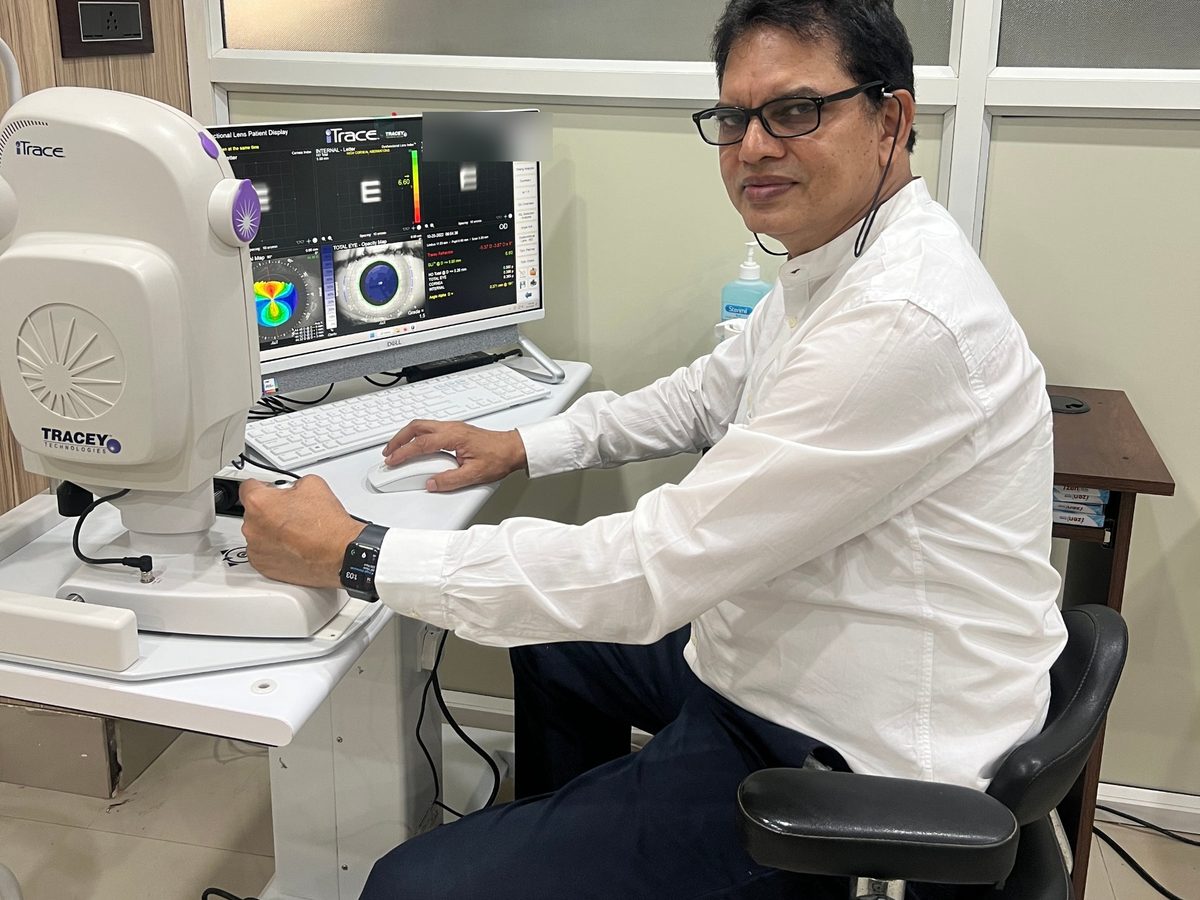
Optical biometry measures the length of the eye. Our iTrace system combines ray-tracing aberrometry with corneal topography: it maps astigmatism and the optical quality of the whole eye, so a toric or premium lens can be planned to the degree.
Check the retina and nerve
An OCT scan of the macula and optic nerve, because premium multifocal lenses work best when the retina is healthy.
Plan each eye
We choose the lens power and target for each eye separately: the same lens in both, different lenses in each eye, or a monovision plan.
Surgery and alignment
Micro-incision phaco surgery under eye drops. Toric lenses are marked and turned to their exact planned angle.
Fine-tune afterwards
Follow-up visits check the result. If a small amount of power remains, it can be corrected.
Is a premium lens right for me?
The right lens depends on your eyes and your life. These are the usual guides; your surgeon will advise you after examining you.
Often a good fit
- You want to depend less on glasses
- You use a computer or phone a lot
- You have astigmatism (choose toric)
- Apart from cataract, your eyes are healthy
- You have happily worn monovision contact lenses
May not suit, or needs care
- Macular degeneration or other retinal disease
- Advanced glaucoma
- Irregular or scarred cornea
- Severe dry eye that is not yet controlled
- Lots of night driving and low tolerance of glare (trifocal)
Your cataract surgeons
All three of our consultants perform cataract surgery with premium lens implants.
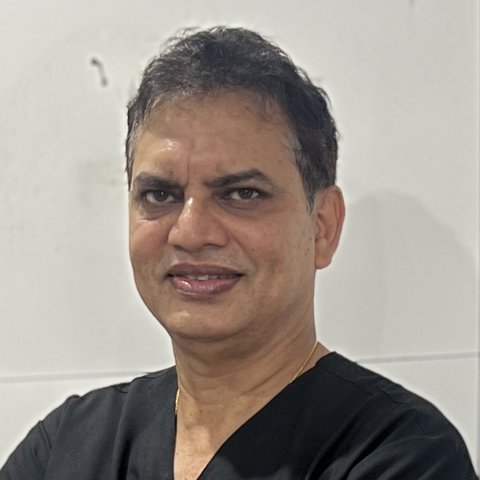
Dr Arup Kumar Bose
MBBS, MS (Ophthalmology), DO, DNB, FACS (USA)
Phaco surgeon; eyelid surgery (oculoplasty), squint and children's eye problems. Director, BOSE EMLC.

Dr Siddhartha Bose
MBBS, MS (Ophthalmology), MRCS (UK)
Cataract, refractive and retina specialist.

Dr Anirban Bose
MBBS, MS (Ophthalmology), Diploma in Diabetes (UK)
Cataract, glaucoma and dry eye specialist.
Questions patients ask
Will I never need glasses again?
Many patients with trifocal or extended monovision lenses manage most of the day without glasses, but no lens can promise this for everyone. We will tell you honestly what to expect for your eyes.
Are the halos permanent?
Halos and rings around lights are common at first with trifocal lenses. For most people they become much less noticeable over a few months as the brain adapts.
Can I have a different lens in each eye?
Yes. Matching lenses to each eye, called mix-and-match or monovision, is part of customising your result.
I have astigmatism. Do I need a toric lens?
If the astigmatism comes from the cornea and is more than a small amount, a toric lens usually gives clearer vision with fewer glasses. Your topography scan will show this.
Do insurance and government schemes cover premium lenses?
Schemes and insurers often cover a standard lens; the extra cost of a premium lens may not be covered. Please bring your card and call us so we can check your cover.
Can I change my mind about the lens later?
Lens exchange is possible but is a further operation, so it is far better to choose carefully now. That is why we take time over the consultation.
Book a lens consultation
Bring your current glasses and a list of your medicines. Sunday to Friday, 9 am to 6 pm. Near Old Launch Ghat, Barabazar, Chinsurah 712101.